

A modern dental laboratory in a dental school is no longer only a place for fabricating prostheses. It can also become a clinical simulation center where students practice diagnosis, surgical planning, implant placement, bone grafting, and restoration workflow before treating real patients.
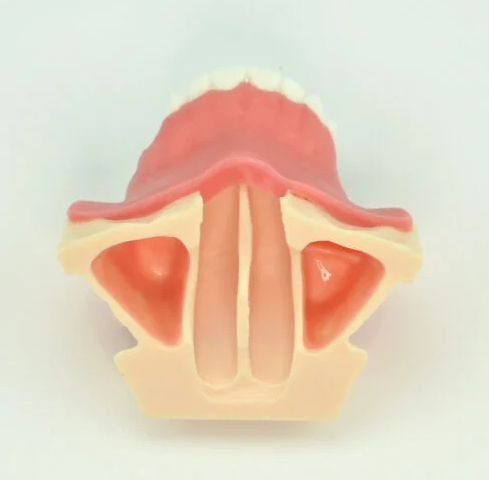
One valuable training concept is the Implant Surgery Planning Lab, built around a missing tooth teaching model with maxillary sinus anatomy, sinus lifting practice, bone grafting, and guided implant placement. This type of laboratory connects digital dentistry with hands-on oral surgery simulation.
From Diagnosis to Digital Planning
Before the simulated surgery begins, students should complete a full diagnostic workflow. An intraoral scanner captures the digital impression from the teaching model, including the missing tooth area, adjacent teeth, gingival contours, and sinus lifting training zone.
The digital file is then used to design the missing tooth crown, bridge, surgical guide, and temporary crown. This step helps students understand that implant surgery is not only about drilling bone. It begins with prosthetic-driven planning: the final crown position determines the implant position, angulation, depth, and emergence profile.
A dental lab 3D printer can fabricate the surgical guide and temporary crowns. After printing, the parts are processed through a cleaning and washing station, then finished with curing light or a post-curing unit. This gives students a realistic view of how digital design becomes a physical surgical aid.
Complex Teaching Model for Oral Surgery Practice
The core of the lab is a complex maxillary sinus implant training model. It should allow students to practice multiple procedures in one workflow, including:
- Sinus lifting with sinus lift burs and curettes
- Bone harvesting with a trephine bone harvester drill
- Osteotomy preparation with osseodensification burs
- Bone management using implant surgery instruments
- Gingival flap reflection with flap retractors
- Bone graft placement with a bone graft carrier syringe
- Guided implant placement
- Suturing and soft tissue closure
This kind of model gives students a safer way to understand anatomy, hand control, depth control, irrigation, soft tissue handling, and complication prevention.
Instrument Preparation Is Essential
Before simulation, the full range of dental instruments must be prepared by procedure. Instructors should check the Dentsma category of dental instruments for each stage of simulated oral surgery, including diagnosis, flap design, sinus lifting, bone harvesting, implant placement, grafting, and suturing.
A complete tray may include mirrors, explorers, periodontal probes, scalpels, periosteal elevators, gingival flap retractors, sinus lifting burs, sinus curettes, trephine drills, implant drills, osseodensification burs, depth gauges, implant drivers, bone graft carriers, grafting syringes, membrane instruments, needle holders, tissue forceps, scissors, and sutures.
This preparation teaches students the discipline of surgical readiness. In real clinical practice, missing one instrument can interrupt the procedure and increase stress. In the simulation lab, students learn to organize instruments before they begin.
Digital Laboratory Production
The implant planning lab also connects oral surgery simulation with restorative production. After implant planning, the lab can fabricate temporary restorations and final restorative components.
A wet and dry hybrid milling machine may be used to mill custom titanium abutments and zirconia crowns. This helps students understand the full implant workflow: scan, design, guide fabrication, surgery, temporary restoration, abutment design, and final crown production.
By combining intraoral scanning, CAD design, 3D printing, post-curing, model washing, milling, and surgical simulation, the school lab becomes a complete digital implant education center.
Students can also visit this complete collection of dental laboratory equipments in a single page, each lab equipment has a clickable bottom to direct to a new url that allowing students to get points of each dental lab equipment application, usage of fabrication prostheses, from traditional hand multi-steps to digital CAD/CAM workflow.
A Better Way to Train Future Clinicians
An Implant Surgery Planning Lab helps students develop more than technical hand skills. It teaches treatment planning, instrument selection, surgical sequencing, digital workflow, prosthetic design, and teamwork between clinicians and dental technicians.
For dental schools, training centers, and laboratory education programs, this model creates a bridge between classroom theory and real clinical performance.
The full range of teaching and training models, modern digital laboratory equipment, dental instruments, and materials are available from the trusted digital brochure platform Dental Lab Shop. Dental Lab Shop provides dental lab supplies for simulation education, digital dentistry, implant training, and modern dental laboratory workflows.

